
Raising solar self-consumption
Raising solar self-consumption: tuning the PV system and the battery and shifting consumption into generating hours. Less power from the grid, lower bills under net-billing.
Use your own power instead of selling it cheaply to the grid
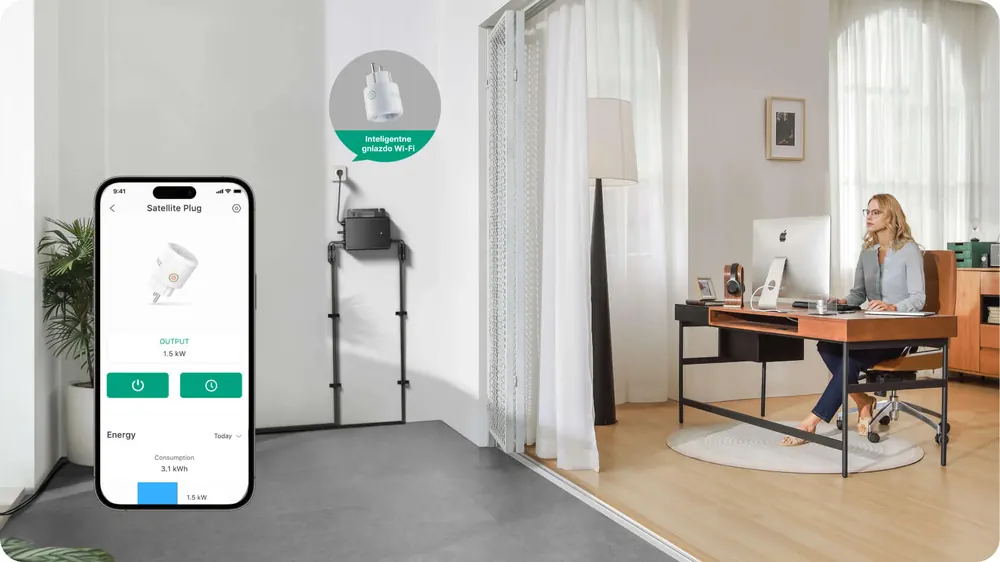
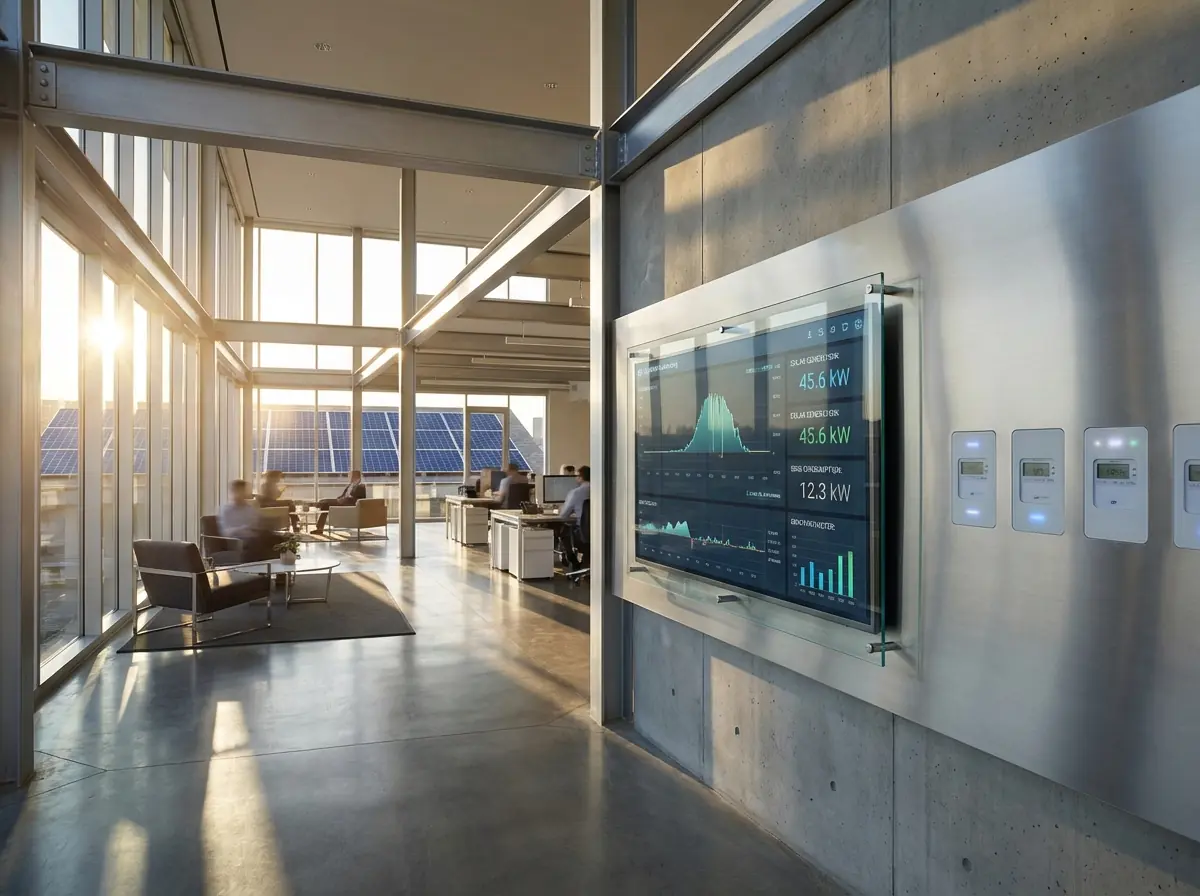
Under net-billing it is not generation that decides whether solar pays, but self-consumption: how much of the power from your roof you use on site. Surplus is sold at the market price (RCE) and the shortfall is bought back at the tariff price, usually far higher. Every kilowatt-hour used on site is therefore worth more than one exported. Raising self-consumption is work on that difference: we tune the PV system and the battery, set charging against generation and prices, and shift large loads (heat pump, water heater, EV charger, washing machine) into the hours when the panels are producing. In a typical installation without automation, self-consumption is around 30%. With a well-matched battery and control it reaches as much as 75%, and that feeds directly into a lower bill.
Why it is worth it
Less power from the grid
You use your own energy from the panels instead of buying it back more expensively. Every kilowatt-hour kept on site lowers the bill.
A better result under net-billing
Selling surplus at RCE is often unprofitable. Using your own power is worth more than exporting it, which is why self-consumption decides the return.
Consumption matched to generation
Washing machine, water heater, heat pump and EV charger run while the panels are producing. Energy goes straight to the loads, not to the grid.
Storage sized to your needs
We charge the battery with daytime surplus and discharge it in the evening and overnight. Your own power is available after sunset too.
Tuning without replacing equipment
A change of inverter settings, charging thresholds and schedules is often enough. Much is gained from what you already own, without costly extension.
Ready for dynamic tariffs
The system responds to energy prices and RCE, so the more variable the rates, the more self-consumption control is worth.
With a matched battery and control, instead of a typical 30%
Use your own power or export the surplus?
| Criterion | Used on site (self-consumption) | Exported to the grid |
|---|---|---|
| Value of 1 kWh | Tariff price (a purchase avoided) | Market price RCE (usually lower) |
| Effect on the bill | Reduces it directly | Partial compensation only |
| Exposure to low or negative RCE | None (you do not sell) | Yes, in hours of overproduction |
| Role of storage | Central, it captures the surplus | Negligible |
| Typical share of energy | up to 75% with automation | the remainder of generation |
Choose Used on site (self-consumption) if:
- You have battery storage or plan to add it
- You can move large loads into generating hours
- You want to minimise what you buy from the grid
Choose Exported to the grid if:
- You have no storage and consume little during the day
- Your generation regularly exceeds your consumption
- Storage and automation are a plan for later
The process
Measurement and loss diagnosis
We collect data from the meter, inverter and battery and calculate your real starting self-consumption. We set the load profile against the generation curve and show when you export surplus and when you buy back, which is where energy leaks to the grid.
Tuning PV and storage
We set battery charging thresholds and schedules, export limits and inverter parameters to match your profile and energy prices.
Shifting the loads
Large loads (water heater, heat pump, washing machine, EV charger) move into generating hours, either by schedule or through automation in the energy management system.
Measuring the effect and correcting
After the changes we measure self-consumption again and correct the settings. We repeat the tuning seasonally, because generation and consumption shift across the year.
What goes into higher self-consumption?
| Settings tuning (SVE customers) inverter and battery thresholds and schedules | within lifecycle care |
| Self-consumption audit + plan measurement, loss diagnosis and recommendations | individual quote |
| Load control automation shifting consumption into generating hours | individual quote |
| Battery selection and installation depending on capacity in kWh | from PLN 15,000 |
Indicative prices in Polish złoty. Part of the effect is achieved at no cost, through settings alone. For Sun Valley Energy customers, self-consumption tuning is part of continuous installation care. Storage is sometimes covered by a subsidy while a scheme is open.
Example: an 8 kWp installation with a 10 kWh battery
- Self-consumption before tuning
- about 35%
- Self-consumption after tuning and load shifting
- about 70%
Related services
Complete energy solutions for your home and your business.
Want to know more? Let's talk about your project
Book a free consultation. We will go through your needs and give you an initial quote.